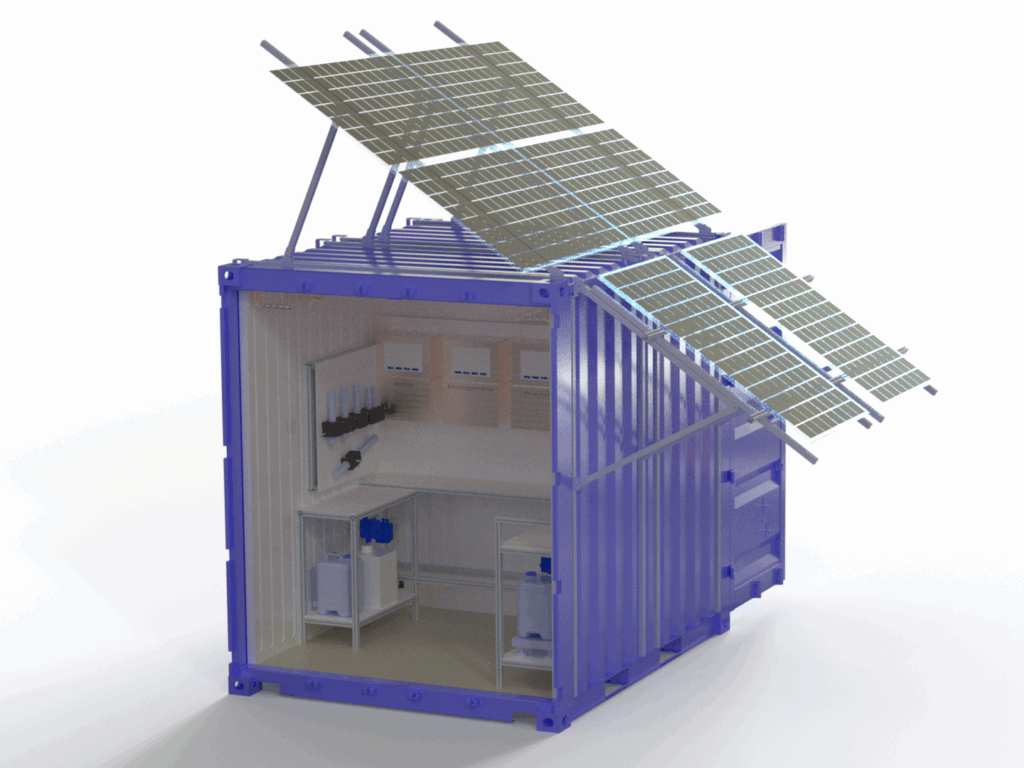
The Blue Box project focuses on the development of a fully integrated, autonomous water quality monitoring system capable of operating in remote environments for extended periods. The project aims to move beyond individual sensors towards a self-contained, field-deployable monitoring laboratory, combining sampling, analysis, and data transmission into a single system.
A key challenge lies in integrating multiple sensor technologies into one operational unit. While sensors for physico-chemical and biological parameters exist, they typically function independently. BlueBox explores how water samples can be automatically collected, distributed across different analytical components, and safely discharged, while maintaining measurement accuracy and system reliability.
Another major research focus is sensor stability and fouling prevention. In natural environments, sensors can lose accuracy within days due to biofouling. The project investigates solutions such as ultrasonic cleaning, chemical treatments, and optimised filtration strategies to maintain long-term performance without manual intervention .
The system is designed to function autonomously for several months, requiring innovations in sample handling, filtration design, energy supply, and data transmission. By combining IoT-based telemetry, remote diagnostics, and intelligent system control, BlueBox contributes to the digitalisation of water quality monitoring and enables high-frequency, real-time insight into aquatic ecosystem dynamics.
Key Specifications & Benefits
Reduced need for manual sampling and laboratory analysis
Autonomous operation for 2–3 months in remote environments
Integrated multi-parameter monitoring (physico-chemical, biological, chemical)
Automated sampling, analysis, and sample storage
Anti-fouling and self-cleaning sensor strategies
Real-time data transmission via IoT and remote diagnostics
High-frequency monitoring for early detection of pollution events

